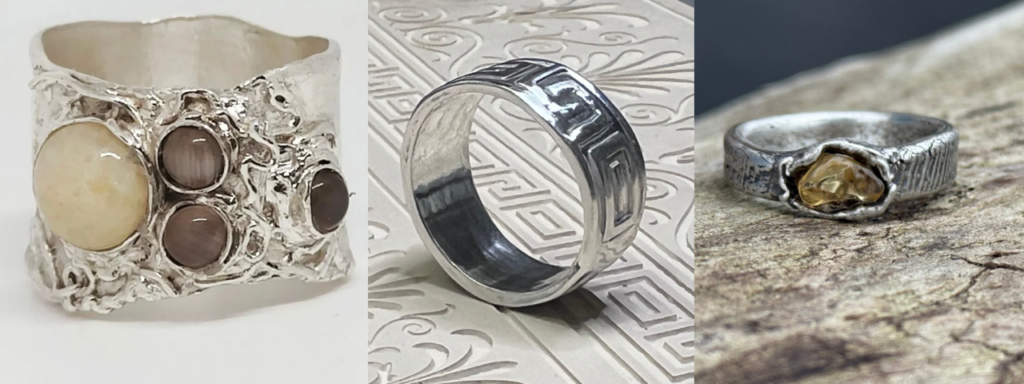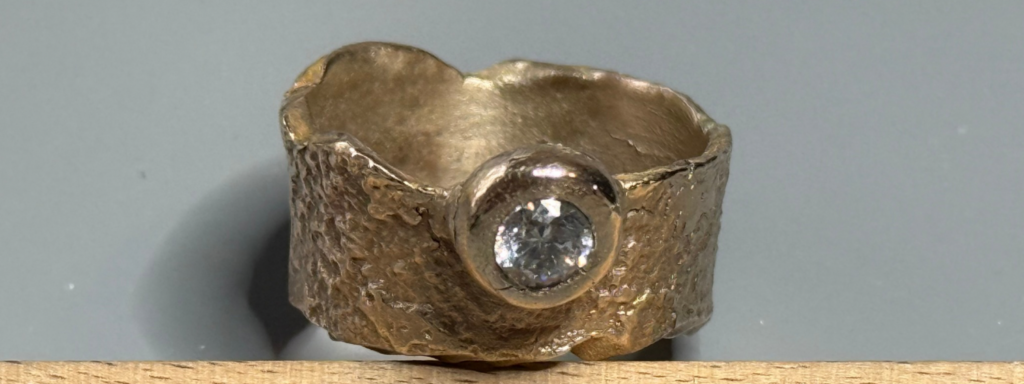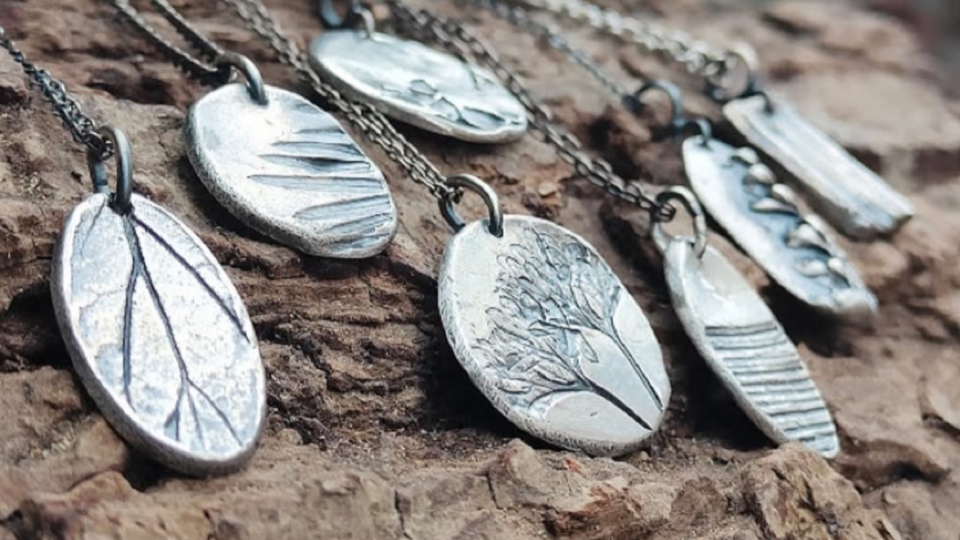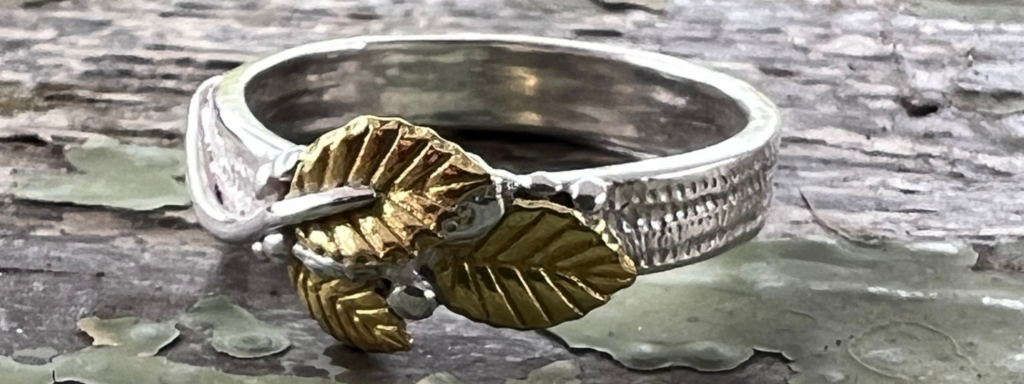
Art Clay Gold and Art Clay Gold paste.
Gold paste 22 carat Art Clay Gold Paste
Art Clay gold paste (22 carats) is a viscous paste (1.5gram) with which you can apply gold accents on surfaces of silver, ceramics, porcelain and/or glass. A diluent (5ml) is included with the paste to achieve a lighter shade of gold. The heating time depends on the surface on which you use the paste. English instructions are included with the paste.
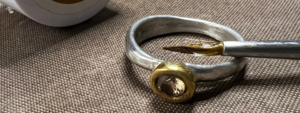
Apply the paste to finished silver ( silver that has not been polished with the white layer still on it) in 3 separate coats. It can be applied immediately after firing your silver. To apply it to already baked and polished silver, then reheat the silver jewelry so that another white layer is visible. Gold is heavier than silver if the piece is baked too long it is possible for the gold to sink into the silver therefore 3 coats are recommended. Multiple coats can cause the top layer to come loose due to shrinkage. If multiple layers are necessary, repeat the technique when the piece has cooled.
Features
The Art Clay Gold Paste contains 77.5% of the indicated weight of 24-carat gold, which becomes 22-carat gold after firing. To dilute the paste, remove the required amount of paste from the jar and place it in a separate mixing container. Then add the required amount of water or included diluent, depending on your desired gold color. If you need a lighter gold color paint on a ceramic, porcelain or glass? Then it is best that you dilute the Gold Pasta with a medium. Recommended ratio to dilute with the medium provided is gold paste (3) : medium (1).
This product is water-based and may eventually dry up. Keep the container tightly sealed. If it dries up, add an appropriate amount of water to restore the paste to its original state.
Preparation
There may be gold pigments at the bottom of the jar. Stir the paste well with a metal spatula before use. Clean the surface of the porcelain, glass or ceramic with alcohol or soap and water to remove any dust or grease. This will prevent the paste from not adhering. Use a brush specifically for use with gold paste.
Application to fired Art Clay Silver
The scope should have a matte surface (not polished but a white appearance). If the piece was baked and polished or oxidized, bake it again in an oven until it changes to a matte finish. Do not apply the Gold paste to an unfired piece, it may peel off. Basically, apply the Gold Pasta undiluted to the silver.
If you want more than 0.5mm thickness, bake it first and then apply an additional layer. Repeat until the desired thickness is reached.
Application on glass or ceramics
You can apply either undiluted or diluted Gold Pasta to a glass surface. If diluted with a the medium provided, it will be smoother and easier to draw with long strips. The layer should be less than 0.5mm thick. Thicker application may peel off due to shrinkage.
Drying
The applied paste must be dried completely before baking. It can be dried in the following ways:
Undiluted
-
With a Hair dryer (1200W): At least 5 minutes. Place the dryer within 10cm/3cm of the piece.
-
Allow to dry naturally: for at least 15 minutes.
-
Diluted
-
With a Hair dryer (1200W): At least 30 minutes. Place the dryer within 10cm/3cm of the piece.
-
Allow to dry naturally: for at least 60 minutes.
Baking
Application to fired Art Clay Silver
In the oven
-
Increase oven temperature to 500°C/932°F.
-
Place the piece in the oven and increase the temperature to 800 ° C/1472 ° F
-
After reaching the temperature, hold for 1 minute. Turn off the oven and let the piece cool.
On the gas stove (2.9kw)
-
Place the stainless steel net on the burner of a gas stove. Make sure the stainless steel net is placed on the center of the burner. Turn on the gas stove. See where the stainless steel net glows the most.
-
Turn off the gas stove. Place the workpiece on the most red-hot part using tweezers.
-
Turn the gas stove back on and bake the workpiece for five minutes. Then turn off the gas stove again, and let the workpiece rest for 20 minutes.
* Maximum dimensions: 5.0cm (L) x 3.0cm (W) x 2.0cm (H)
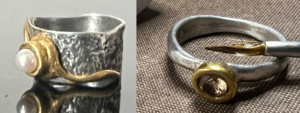
Application on porcelain or ceramics in the kiln
-
Place the piece in a cold oven and heat to 800 ° C/1472 ° F.
-
Turn off your oven when the temperature reaches 800° C/1472° F. There is no waiting period.
-
You may remove the piece from the oven when it reaches 100° C/212° F, or, of course, cool it to room temperature.
The application to glass in the furnace
-
Place the piece in a cold oven and heat to 800°C / 1472°F.
-
When the temperature reaches 800°C/1472°F, maintain it for 5 minutes.
-
Open the oven door and let the piece cool (crash-cool) to 600°C/1112°F and close the oven door again.
-
Let the oven come to room temperature before taking the piece out.
Note: Baking with the gas burner is not recommended for this product.
Finish
The surface where the gold paint was applied will be matte in color due to crystallization, but a shine can be obtained by polishing it. Do not polish too hard on the gold-covered area on glazed surface. Polish with light gliding strokes, which is enough to bring out a luster. If the gold comes off during polishing, it is possible to attach it with Art Clay Silver Paste Overlay, which requires a second firing process to adhere.
Warnings when using Art Clay Gold Pasta:
-
Ventilate your workspace well during baking.
-
During drying and baking, be careful not to burn yourself or cause a fire.
-
Keep this product away from children.
-
If you get this product in your eyes or mouth, rinse immediately with plenty of water and call your doctor immediately.
-
Do not put a ceramic or porcelain piece to which the Art Clay Gold Pasta has been applied in a microwave oven.
-
Keep this product indoors and out of sunlight.
-
Do NOT put this product in the refrigerator.
-
Use this product as soon as possible after opening.
This gold clay is malleable and easy to roll out and shape into a real gold piece of jewelry.
Gold Clay
Gold clay works the same way as silver clay, but the firing temperature is different. Gold clay must be baked at 990°C for 60 minutes.
Combination with Silver Clay
You can combine gold clay and silver clay. However, you cannot bake it at the same time. The firing temperature of gold clay is higher than the melting point of silver. If you want to combine it, first bake the gold separately. Then you can add the fired gold to the unfired silver clay jewelry. Then make sure that the silver clay “holds” the gold (just like when co-firing a zirconia) The shrinkage of the silver clay causes the gold clay to be held.
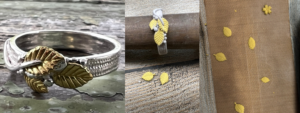
Composition
This gold clay consists of 22-carat gold powder (91% gold and 8.3% silver), supplemented by a binder and water. The binder is made of natural material and is harmless During drying, the water evaporates and during firing, the binder burns.
Machinability & Drying
Gold clay dries relatively quickly. Make sure the shaped piece is completely dry before firing. This can be done in several ways:
- Air drying: at least 24 hours
- With a hair dryer / on the lowest setting on an electric hob, on a hot plate or in a domestic oven: 10 minutes at 100°C
Insufficiently dried gold clay, like silver clay, can crack during firing.
Use
Use a ceramic kiln. The minimum baking temperature of gold clay is 990°C for 60 minutes.
Finishing & Polishing
After firing, the jewelry is matte. For a nice shine, you can brush it with a polishing brush and further polish it with sanding pads or an agate pen.
Storage & Shelf Life
Store unused gold clay in an airtight container or wrapped in cling film with a damp cloth in a cream jar to prevent drying out.
Safety warnings
Ensure adequate ventilation during baking.
Keep out of the reach of children.
Avoid contact with skin, eyes and mouth.
If the product gets into your eyes or mouth, rinse immediately with plenty of water and consult a doctor.
In case of skin irritation or itching: wash the affected area thoroughly and consult a physician immediately.