Glass fusing (also called fused glass and fused glass technique) is a technique used in glass art in which pieces of glass of the same or different colors are joined together by partially fusing them. Glass fusing thus also offers the possibility of blending or mixing the different colors of glass pieces with each other.
Two or more pieces of colored glass are superimposed or overlapped and heated to temperatures ranging from 593°C to 816°C. Care must be taken that glass with different coefficients of expansion, also known as COE, cannot be fused together, or the created object will break during cooling or afterwards. Many glass artists therefore limit themselves to glass of one COE. COE 90 and 96 are suitable for glass fusing. Moreover, after cooling, cracks can still jump into the fused glass when there are large temperature fluctuations.
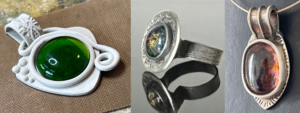
Glass cabochons for jewelry
Before fusing, lay 2 square pieces of glass on top of each other to form a star to make a round cabochon.
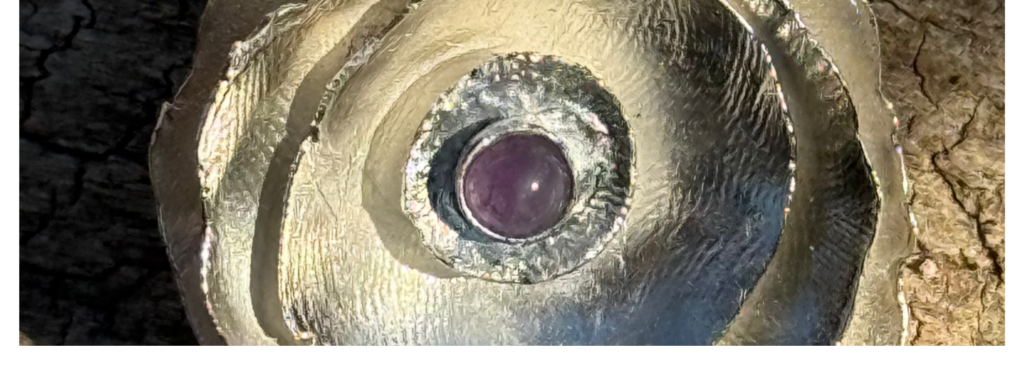
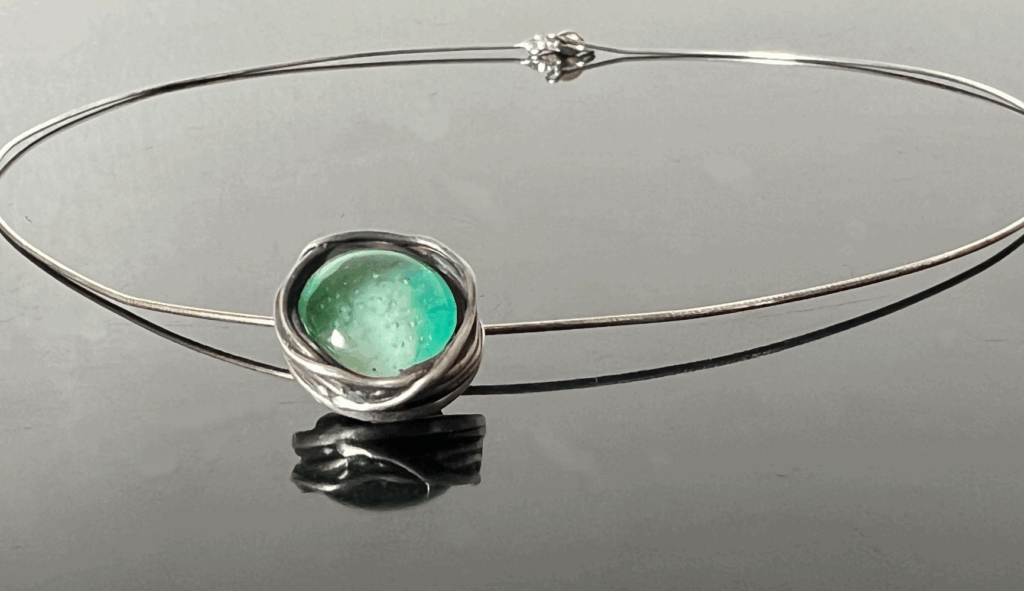
Silver clay and glass cabochons go together perfectly.
Because the melting temperature of glass is higher than the firing temperature of silver, glass cabochons can be fired perfectly together with silver clay. Be sure to give the glass cabochons room to expand. This can be done by making an opening in the silver clay behind the glass cabochon.
Dichroic glass
Dichroic glass is an exclusive type of glass. Dichroic glass plates are mostly shiny sheets of glass that can be fused onto black, white or transparent glass. The plates have different structures, colors and shapes. Dichroic glass is mainly used for jewelry.
Dichroic glass cabochons
Getting started quickly? In the shop you will also find ready-made dichroic glass cabochons suitable for firing with silver clay.