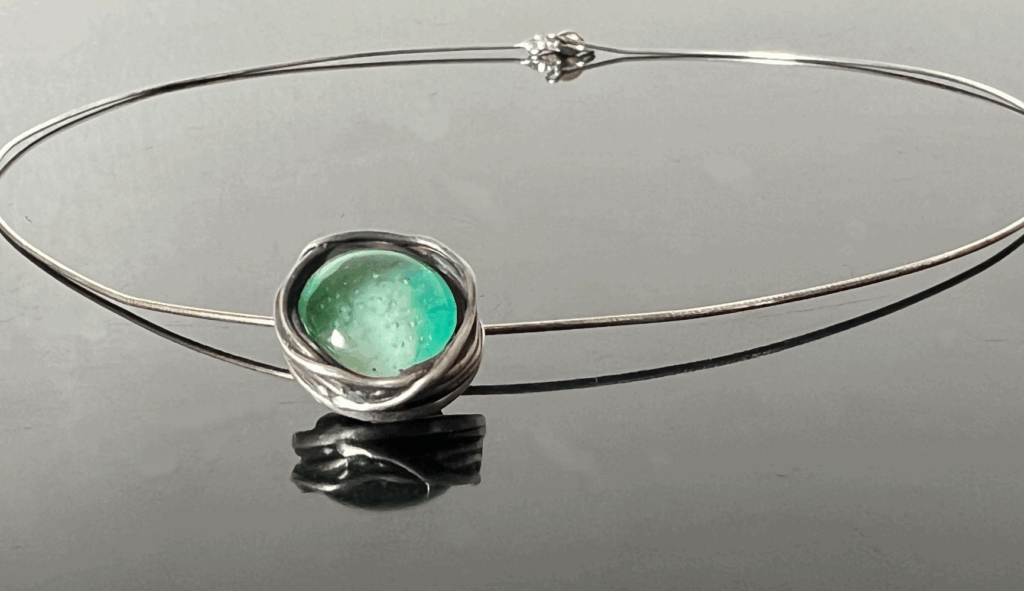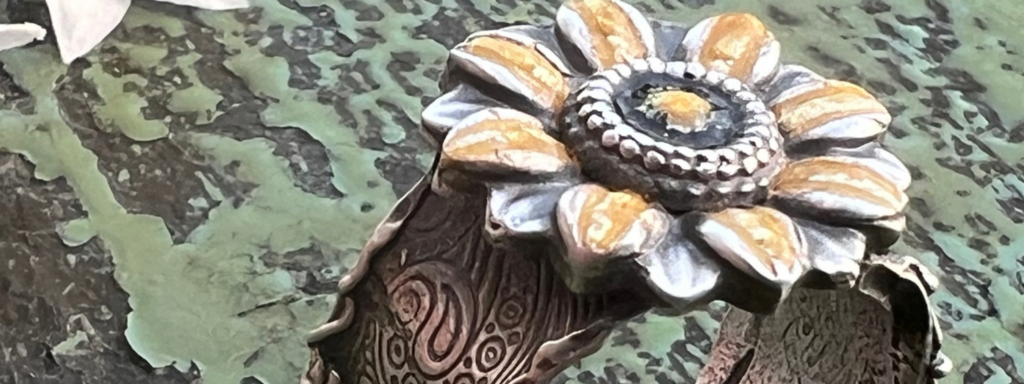
Enamel is a wonderful way to decorate silver jewelry, adding color, with different techniques that vary in complexity and effect. Whether you choose a subtle, colorful finish or a detailed work of cloisonné, the result is always unique and colorful. The process requires patience and skill, but the end result can be beautiful and timeless!
A glaze made of ground glass (enamel powders) is applied to a metal surface and then heated to melt and adhere to the metal.
How does enameling work on silver jewelry?
-
Preparation of the metal: Silver is often polished and cleaned to create a smooth surface for the enamel.
-
Applying enamel: Enamel comes in different forms, such as powder, liquid or paste. It is applied to the silver with a fine brush, a pipette or even a knife. It can be applied in thin layers, with each layer needing to be fired to strengthen the bond between the enamel and the metal.
-
Firing: The jewelry piece is then fired at a high temperature (approximately 750°C to 850°C), causing the enamel to melt and adhere to the metal. This process ensures that the colors remain vibrant and durable.
-
Finish: After firing, the jewelry may be polished to give a glossy finish. Sometimes an additional layer of enamel is also applied to deepen the color or improve the shine.
Types of enamel
There are different types of enamels, depending on how they are applied and fired:
-
Hot enamel:
This is the traditional form of enamel in which the enamel powder is melted by heating. Hot enamel can be applied in different ways, such as by putting powder on the metal or by pouring it in liquid form (powder mixed with water) on the jewelry piece. It is then baked in an oven to melt it. -
Cloisonné:
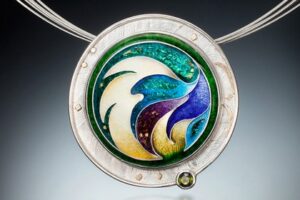
Cloisonné is a technique in which thin metal wires are used to create small compartments (cloisons) on the jewelry. The enamel is then inserted into these compartments and fired. This technique is known for its detailed and colorful designs, often with a complex pattern.
-
Champlevé:
Champlevé is a technique in which metal is hollowed out to create small compartments. These compartments are then filled with enamel and fired. The result is a deeper relief where the enamel fills in the incised areas of the metal. -
Plique-à-jour:
Plique-à-jour is a delicate technique in which no backing of the enamel is used, allowing light to shine through the enamel. It looks a bit like enamel stained glass. This technique requires much skill, as the enamel must be fired without support, which is challenging to make. -
Basse-taille:
This technique involves engraving a shallow engraving or pattern into the metal and then applying enamel to the engraved areas. This creates a beautiful effect where the texture of the metal remains visible through the enamel. Use only transparent enamel colors for this purpose.
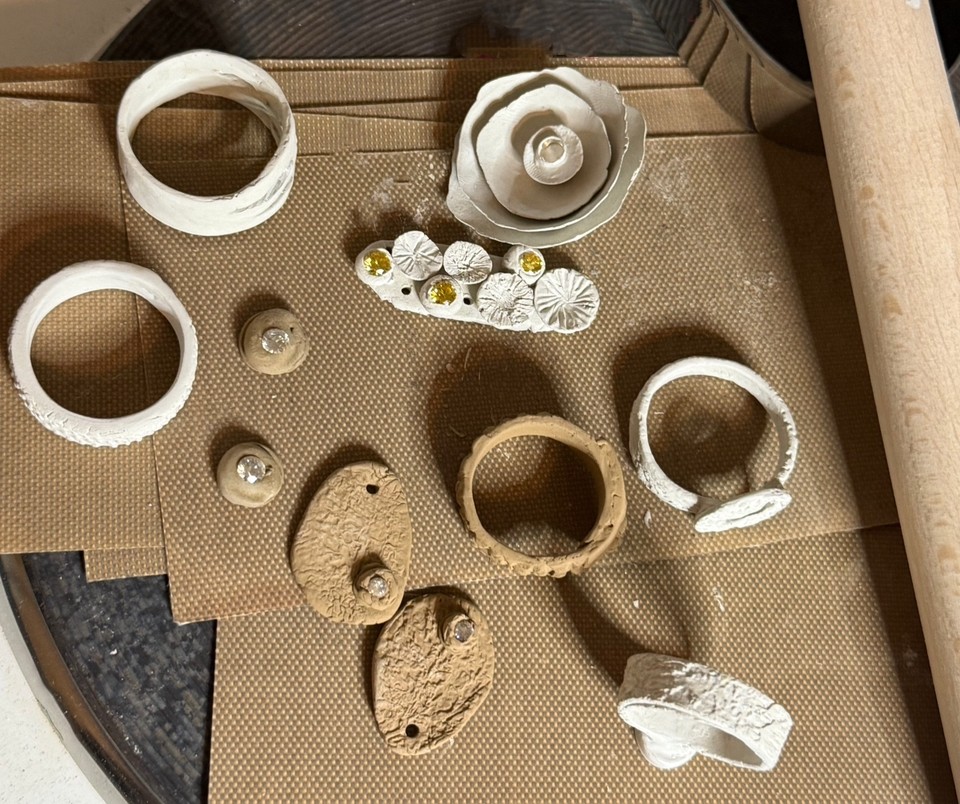
Metal clay – silver clay and enamel.
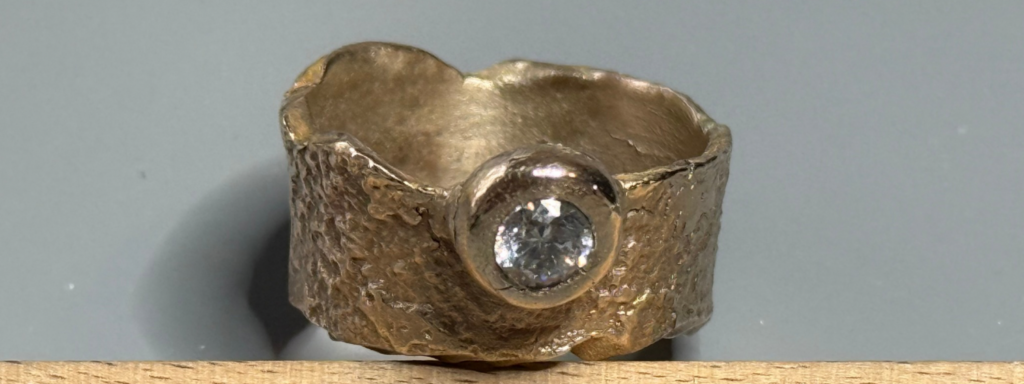
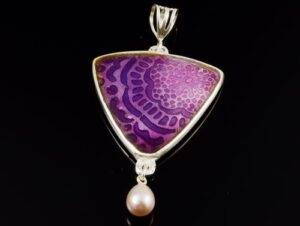
Especially the Basse waist technique is very suitable for silver clay. Engraving is not necessary at this point. Textures can be applied to the clay using texture paper / texture wallpapers and texture mats. Use only transparent enamels for this technique
Baking of Enamel
Firing can be done in a ceramic kiln or with a hand torch ( torch) Both techniques have their own advantages and disadvantages, depending on the type of objects and the desired result.
1. Oven (oven enameling)
Oven enameling involves firing the enamel in an oven. This is a controlled process in which the temperature and time of firing are essential to getting the right result.
Placed the object in a preheated oven, where the temperature is typically between 700 °C and 900 °C.
The heat of the oven causes the enamel to melt and adhere to the metal surface. As the enamel cools, it forms a hard, shiny and durable surface.
2. Torch / Gas burner (manual enameling).
When enameling with a gas torch (also called torch enameling), you use a direct flame to melt the enamel and work the surface.
- Operation:
- You apply the enamel to the object just as in the oven method.
- Instead of placing the object in an oven, it is heated directly with a gas burner (for example, a butane or propane burner).
- The flame is slowly moved over or under the object, causing the enamel to melt and adhere to the metal.
- Once the enamel is melted and has a glossy finish, allow the object to cool.
- Advantages:
- Great for small objects or detailed work because the technique is by hand and you can work more precisely.
- Faster than using an oven, especially for small quantities or repairs.
- Disadvantages:
- It can be more difficult to get an even finish than with an oven because you cannot always spread the flame perfectly evenly over the surface.
- Less suitable for large objects or if you need to apply a lot of enamel.