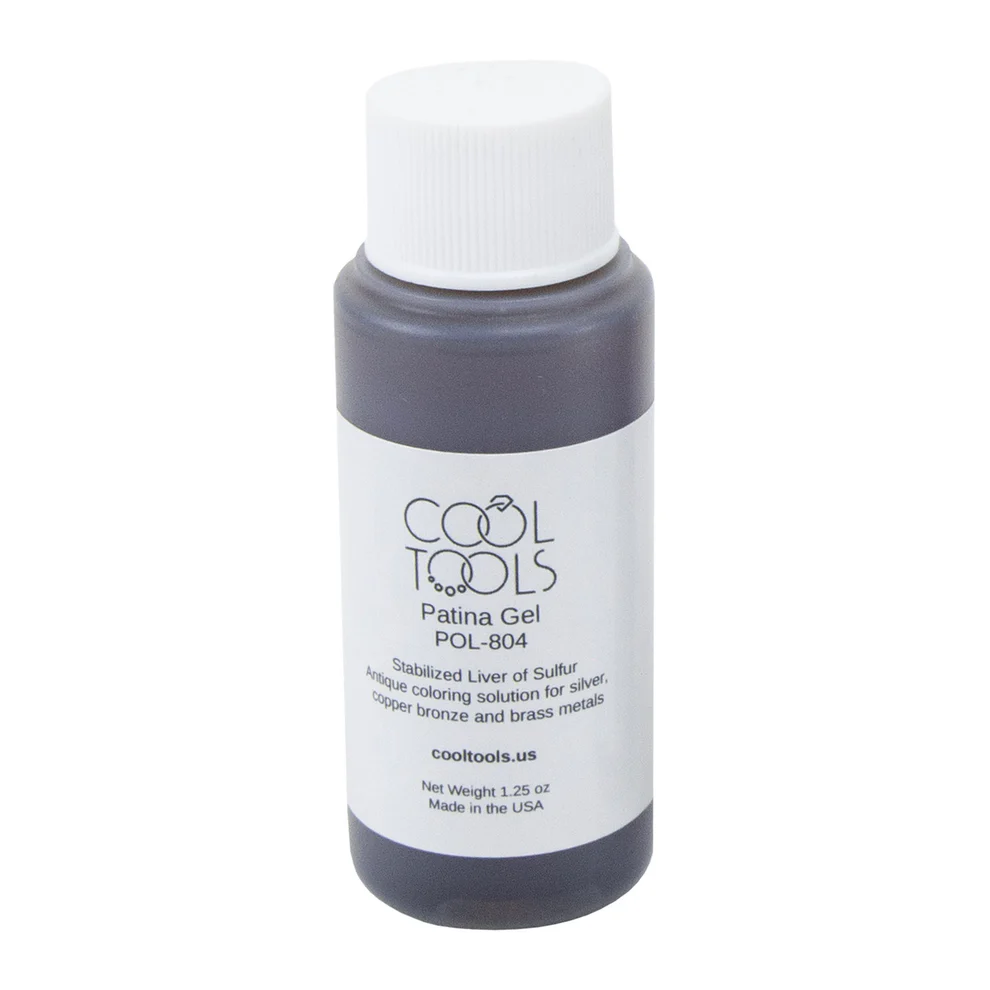
Patina Liver or Sulfur in Gel form
€ 12,95
Product number AM 48
In stock
Description
Cool Tools Patina Gel is patina in gel form. Not only is it the most convenient and easiest way to use liver or sulfur, but it also does not lose its effect by exposure to light and air.
Cool Tools Patina Gel is economical to use. Use only what you need thanks to the convenient dispenser. You also no longer have to throw away an entire package because the lid wasn’t on properly. Patina Gel is always ready to use, and you only need a few drops.
Cool Tools Patina Gel is safe. The unique chemical composition of Cool Tools Patina Gel makes it non-flammable
Cool Tools Patina Gel can be made as strong or as weak as you like. A lemon yellow color is a good starting point. Use more or less to adjust the intensity.
Antique Patina: Stir 1/4 teaspoon Patina Gel into a glass or plastic container with 180 to 360 ml of very hot (not boiling) water. Dip the objects into the patina solution with tweezers, hang them on a curved wire or use gloves. Once you have achieved the desired color, remove the objects and soak them for about 5 minutes in a neutralizing solution of water with some baking soda , rinse, dry and finish.
Rainbow Patina: Mix as described above, but use lukewarm water instead of hot water. Quickly dip the items into the solution and remove them. Watch the colors develop. Once you see the desired colors, immediately dip the objects into the neutralizing bath to stop the process.
Rainbow Patina Extra Bright. Follow the instructions for the Rainbow Patina above, but add about 1 tablespoon of ammonia to the solution. The ammonia brightens the colors and makes them stand out better. Neutralize the pieces after you achieve the desired colors.
For an even patina, the metal must be completely clean and free of fingerprints, polish, grease, etc.
Neutralize
It is very important to neutralize newly submerged pieces. If you do not neutralize the metal, the sulfur liver will continue to react with the metal and your item will need to be re-polished immediately. Leave objects in the neutralizing bath for about 1 to 2 minutes with regular metals, and slightly longer with metal clay. Metal clay is porous and the patina solution may soak into it and continue to react for several minutes.
After dipping, try using a paste of water and baking soda to remove oxidation from the high parts. By the way, make sure you have a box of baking soda by the sink as you work. Scoop about a tablespoon of baking soda into the palm of one hand. Add a few drops of water and make a thick paste. With your thumbs, rub the paste into the metal. This not only removes the oxidation from the high spots, but also helps neutralize the oxidizing effect. You can leave the item as is or polish it as desired.
For the deepest black, it is better to immerse the object several times than to soak it once for a long time. Leave the object in the solution until it turns dark gray. Take it out and rub off the unwanted oxidation with a paste of baking soda. Rinse it and then reapply a patina. Repeat until you are satisfied with the black color.